A good garden does not begin with buying the prettiest plants. It begins with understanding the space you already have.
The DecoradHouse garden tips by DecoratorAdvice topic is best approached as practical guidance for creating an outdoor area that looks attractive while remaining healthy and manageable. The most useful starting points are sunlight, soil, drainage, plant selection, watering, layout, and maintenance.
DecoradHouse garden tips by DecoratorAdvice focus on planning an outdoor space around sunlight, soil, drainage, plant needs, water use, and everyday function. Start by observing your garden, choose plants suited to local conditions, create clear zones, use mulch where appropriate, and build a maintenance routine that fits your available time.
Several pages currently use this keyword or closely related variations, but they often repeat the same general advice about plants, furniture, lighting, and decoration. This guide takes a more practical approach by focusing on the decisions that determine whether a garden actually works over time.
What Are DecoradHouse Garden Tips by DecoratorAdvice?
The phrase DecoradHouse garden tips by DecoratorAdvice appears online as a topic associated with home, garden, and outdoor design advice. It is not necessary to treat “DecoradHouse” as a formally documented gardening system.
Instead, the useful idea behind the keyword is straightforward: combine garden design with practical plant care.
That means thinking about questions such as:
- How much sunlight reaches the garden?
- Where does water collect?
- What type of soil is present?
- Which plants suit the local conditions?
- How much maintenance can you realistically manage?
- How will people move through and use the space?
This approach prevents a common mistake: designing a garden around appearance first and discovering later that the plants, watering requirements, or layout do not suit the site.
Start by Studying Your Garden
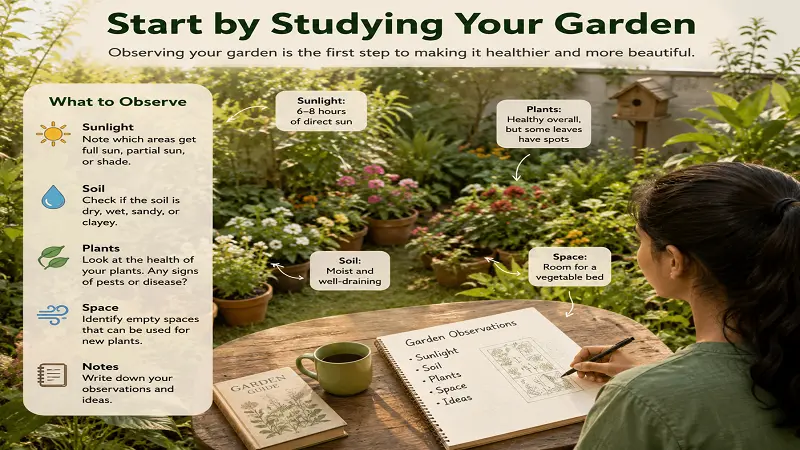
Before purchasing plants, furniture, containers, or decorative features, observe the space.
Check the garden at different times of day. Notice which areas receive full sun, partial shade, or little direct light. Also look for places where soil stays wet after rain and areas that dry out quickly.
Plant selection should reflect these conditions. Penn State Extension recommends considering factors such as sunlight, soil texture, drainage, temperature, rainfall, and wind exposure before choosing landscape plants.
Make a simple site checklist:
| What to check | Why it matters |
|---|---|
| Sunlight | Determines which plants can thrive |
| Soil type | Influences drainage and plant performance |
| Water movement | Helps identify wet or dry areas |
| Wind exposure | Matters for delicate plants and containers |
| Available space | Prevents overcrowding |
| Existing paths | Helps create practical movement |
| Maintenance access | Makes future care easier |
A few days of observation can prevent expensive planting mistakes.
Choose Plants for the Conditions, Not Just the Look
A plant may look perfect in a photograph and still be a poor choice for your garden.
The better question is not “Do I like this plant?” It is “Can this plant thrive here?”
Consider its requirements for:
- Sunlight
- Soil moisture
- Soil type
- Mature size
- Temperature
- Drainage
- Maintenance
- Local climate
For example, a plant that prefers dry, sunny soil may struggle in a poorly drained shady corner. Likewise, a moisture-loving plant may require more attention if placed in an area that dries out quickly.
Native and regionally appropriate plants can also be useful choices. The U.S. Environmental Protection Agency notes that native and low-water-use plants adapted to local soils and climate can require less supplemental water once established.
The important point is that “native” does not automatically mean “right for every location.” Site conditions still matter. Penn State Extension similarly recommends matching native plants to the specific soil, sunlight, moisture, and available space.
Create Zones Instead of Filling Every Corner
A garden becomes easier to use when different areas have clear purposes.
Depending on the available space, you might create:
A planting zone
Use this area for flowers, shrubs, herbs, vegetables, or other plants.
A seating zone
Place a bench, chairs, or a small table where people can comfortably spend time.
A pathway zone
Keep a clear route between the house, garden beds, storage areas, and seating.
A feature zone
Use one focal element such as a container, small tree, planter arrangement, sculpture, or water feature.
The goal is not to create as many zones as possible. Too many separate elements can make a small garden feel crowded.
Instead, identify what you actually want to do outside and design around those activities.
Use Vertical Space in Small Gardens
Small gardens do not necessarily need more floor space. They can often benefit from better use of vertical space.
Walls, railings, trellises, shelves, hanging containers, and climbing structures can add planting opportunities without taking over the walking area.
The Royal Horticultural Society recommends thinking vertically in small gardens, including using walls, climbers, staging, shelves, and grouped containers.
However, vertical gardening still requires planning.
Check:
- Whether the structure can support the container or plant
- Whether the location receives enough light
- How water will drain
- Whether climbing plants need support
- How you will reach the plants for maintenance
A vertical garden should save space, not create a difficult maintenance problem.
Improve the Soil Before Adding More Plants
Healthy plants depend heavily on the growing conditions beneath them.
Before planting, examine the soil. Is it compacted? Does water drain too quickly? Does it remain wet for long periods? Does it contain enough organic matter?
Soil type affects drainage and plant selection. The RHS recommends understanding whether soil is clay, sand, silt, loam, or chalk and considering drainage and pH when planning a planting area.
Adding appropriate organic matter can improve soil structure and water-holding capacity, although the correct approach depends on the soil and plants involved.
Do not assume that adding more fertilizer is always the answer. A soil test can provide useful information about nutrient levels and pH before amendments are applied.
Water the Root Zone, Not Just the Leaves
Watering is one of the easiest garden tasks to get wrong.
Instead of repeatedly wetting the surface or spraying foliage without purpose, aim to deliver water where the plant can use it.
The RHS recommends watering slowly and thoroughly, with attention to the root zone. Newly planted plants generally need more regular watering while they establish, while established plants may need much less depending on conditions.
A practical routine is:
- Check the soil before watering.
- Consider recent rainfall.
- Water newly planted plants more carefully during dry periods.
- Direct water toward the root area.
- Avoid creating persistently waterlogged conditions.
- Adjust the routine according to season and weather.
There is no universal watering schedule that works for every garden.
Use Mulch to Reduce Routine Maintenance
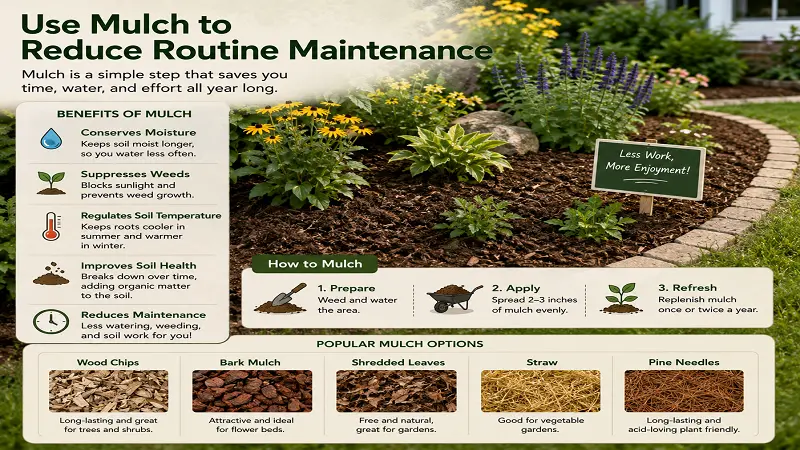
Mulch is useful for both appearance and garden management.
The RHS notes that mulch can help conserve soil moisture, suppress weeds, protect roots, and improve the appearance of beds.
Depending on the garden, suitable mulch can include materials such as well-rotted compost, chipped bark, gravel, or other appropriate coverings.
Do not pile mulch directly against tree trunks or shrub stems. The RHS warns that direct contact can create conditions that contribute to stem problems.
Think of mulch as part of a maintenance strategy rather than simply another decorative layer.
Make the Garden Comfortable as Well as Attractive
A garden should be designed for real use.
If you want to drink coffee outside, create a comfortable place to sit. If you regularly entertain guests, leave enough room for movement. If gardening is your main activity, make sure beds and containers can be reached without stepping through planted areas.
Furniture should match the available space.
For a small patio, compact or foldable pieces may work better than large furniture. In a larger garden, a defined seating area can help give the space a clear purpose.
The key is to avoid buying furniture first and then trying to make the garden fit around it.
Add Lighting With a Purpose
Outdoor lighting can extend the useful hours of a garden, but it should not be added simply because an empty area needs decoration.
Think about three purposes:
- Safety: illuminate steps, entrances, and paths.
- Function: provide enough light around seating or dining areas.
- Accent: highlight a tree, planting bed, wall, or architectural feature.
Avoid placing too many lights close together. A few strategically positioned fixtures can create a more balanced result than covering every surface with lights.
For electrical installations, follow applicable local safety requirements and use products designed for outdoor conditions.
Design a Garden That Supports Pollinators
A visually attractive garden can also provide useful habitat.
Pollinator-friendly gardening can include diverse plants that flower at different times, locally appropriate species, and areas where pollinators can find food and shelter.
EPA guidance recommends practices such as planting native flowers, supporting continuous blooms, and using integrated pest management to reduce unnecessary pesticide exposure.
If pesticides are necessary, always follow the product label. Application timing can matter because some pollinators are active around flowering plants during the day.
This is one area where garden design and responsible maintenance directly overlap.
Keep Garden Maintenance Realistic
The best garden is not necessarily the one with the most plants.
It is the one you can maintain.
Before adding another flower bed, hedge, container collection, or lawn area, ask how much time it will require.
A simple maintenance plan can include:
Weekly
- Check containers and newly planted areas.
- Remove obvious weeds.
- Look for signs of plant stress.
- Check paths and seating areas.
Monthly
- Inspect supports and trellises.
- Check irrigation equipment.
- Clean outdoor furniture.
- Review plants for pests or disease.
Seasonally
- Prune plants according to their requirements.
- Refresh suitable mulch.
- Remove dead or damaged growth where appropriate.
- Adjust watering as weather changes.
- Review plants that have outgrown their locations.
The exact timing depends on plant species and local climate, so avoid applying a single calendar to every garden.
Common Garden Mistakes to Avoid
Buying plants before checking the site
This can result in plants being placed in unsuitable light, soil, or moisture conditions.
Planting too closely
Young plants may look appropriately spaced at first, but mature size matters.
Overwatering
More water does not automatically mean healthier plants. Poor drainage and excessive moisture can create problems for plants that require drier conditions.
Choosing plants only for appearance
A beautiful plant that cannot tolerate your garden conditions can become a constant maintenance problem.
Filling every empty area
Empty space can provide movement, visibility, and visual balance.
Ignoring access
If you cannot easily reach a plant, path, tap, or storage area, routine maintenance becomes harder.
Using pesticides as the first response
Identify the problem before treating it. Integrated pest management can help reduce unnecessary pesticide use and protect beneficial organisms.
A Simple DecoradHouse Garden Planning Checklist
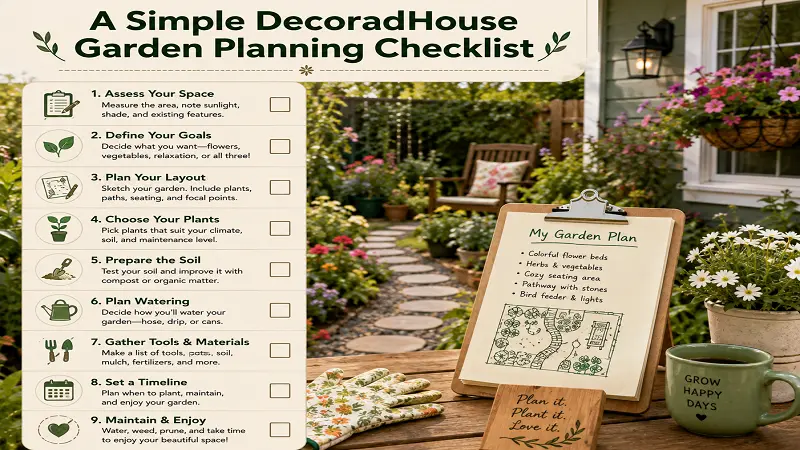
Before starting a garden improvement project, work through this checklist:
Step 1: Observe sunlight and shade.
Step 2: Identify wet, dry, and compacted areas.
Step 3: Determine how you want to use the garden.
Step 4: Choose plants according to site conditions.
Step 5: Decide where paths and seating should go.
Step 6: Improve soil where necessary.
Step 7: Plan watering and drainage.
Step 8: Add mulch where appropriate.
Step 9: Introduce furniture, lighting, or decorative features only where they serve a purpose.
Step 10: Create a maintenance routine you can realistically follow.
This sequence keeps design decisions connected to practical gardening rather than treating decoration and plant care as separate projects.
Final Takeaway
The most useful DecoradHouse garden tips by DecoratorAdvice are not about copying one particular garden style. They are about making decisions that suit your own outdoor space.
Start with the conditions you cannot easily change, such as sunlight, soil, drainage, and climate. Then choose plants and features that work with those conditions.
From there, create clear zones, use vertical space where useful, manage water carefully, protect soil with appropriate mulch, and keep maintenance realistic.
A successful garden does not need to be complicated. It needs to work for the plants, the space, and the people who use it.
7. FAQ Section
What are DecoradHouse garden tips by DecoratorAdvice?
DecoradHouse garden tips by DecoratorAdvice refer to practical ideas for planning, planting, styling, watering, and maintaining an outdoor space. The useful focus is on matching garden decisions to sunlight, soil, drainage, climate, available space, and maintenance needs.
How should I start planning a garden?
Start by observing the garden before buying anything. Check sunlight, shade, soil, drainage, wind exposure, existing paths, and how you intend to use the space. This information can guide plant and layout decisions.
How do I choose plants for my garden?
Choose plants according to their sunlight, soil, moisture, temperature, mature size, and maintenance requirements. Regionally appropriate and native plants can be useful, but they still need to match the specific conditions of the planting site.
How often should a garden be watered?
There is no single schedule for every garden. Newly planted plants generally need more attention while establishing, while established plants may need less supplemental water depending on weather and local conditions. Water deeply around the root zone rather than relying on frequent shallow watering.
Is mulch useful in a garden?
Yes. Appropriate mulch can help conserve moisture, suppress weeds, protect soil, and reduce some routine maintenance. It should be applied correctly and kept away from direct contact with plant stems and tree trunks.
How can I make a small garden look bigger?
Use vertical space, keep pathways clear, limit unnecessary furniture, group plants thoughtfully, and avoid filling every available surface. Vertical planting can make better use of walls, railings, shelves, and other structures.