A comfortable home is about more than attractive furniture or fashionable colors. It should also suit your daily routine, make good use of available space, and reflect your personal taste. Finding practical ideas for achieving that balance can make home improvement projects easier to plan.
DecoratorAdvice.com is a home-focused blog that shares ideas for interior decorating, exterior design, and everyday home improvement. Visitors can explore guidance on furniture, room styling, outdoor spaces, and practical DIY projects to help make their homes more comfortable, attractive, and functional.
The DecoratorAdvice.com Home search leads readers toward home decorating inspiration and practical guidance. The official website, DecoratorAdvice.com, covers interior decoration, home exteriors, and everyday home tips. These topics can help readers explore different ways to improve their living spaces without treating every project as a complete renovation.
What Is DecoratorAdvice.com?
DecoratorAdvice.com is a blog focused on making home design more approachable. Its published categories include decorating your home, improving exterior spaces, and finding useful tips and guides for everyday living.
Readers interested in home design can explore ideas for arranging furniture, choosing decorative accents, improving outdoor areas, and making their spaces more functional.
The website’s content is relevant to homeowners, renters, and anyone looking for inspiration before starting a decorating project. However, readers should evaluate individual recommendations according to their own needs, budget, and property conditions.
You can visit the official DecoratorAdvice.com website to explore its available content.
1. Explore Interior Decorating Ideas
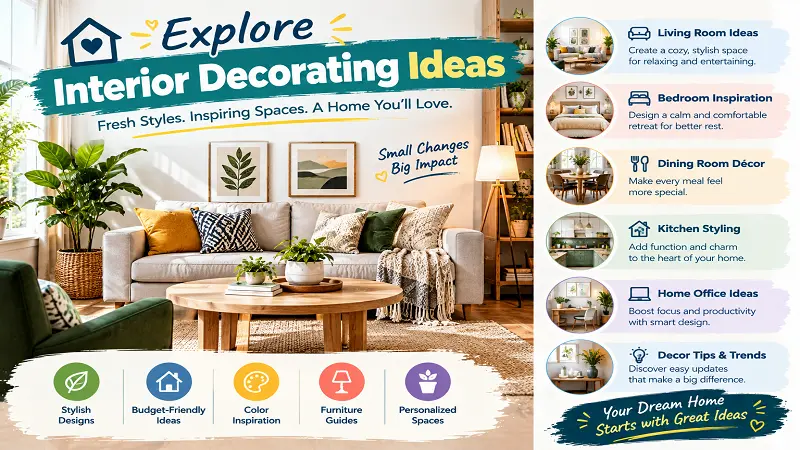
Interior decorating can change the appearance and atmosphere of a room without requiring major structural work.
Simple decisions about color, lighting, furniture placement, and accessories can help a room feel more organized and comfortable. The best choices depend on the room’s size, natural light, existing furniture, and intended use.
Choose a Color Scheme That Works
Start by identifying the colors already present in your flooring, furniture, and larger fixtures. Choose a small group of complementary colors rather than introducing many unrelated shades.
Light colors can help a room feel brighter, while darker shades may create contrast and visual depth. Test paint samples under different lighting conditions before committing to a complete room makeover.
Arrange Furniture for Everyday Use
Furniture should support movement and conversation rather than simply fill empty space.
Keep frequently used pathways clear, leave enough room to open doors and drawers, and position seating according to how the room is used. Measuring furniture before buying it can prevent expensive mistakes.
Add Texture and Personal Details
Curtains, rugs, cushions, artwork, and plants can introduce texture and personality. A few carefully selected items often create a more balanced result than filling every available surface with decorations.
Choose pieces that complement the room while serving a purpose or reflecting your interests.
2. Make Small Rooms Feel More Functional
Limited space does not mean a room must feel crowded. Thoughtful furniture choices and better organization can make smaller homes easier to use.
Begin by identifying the activities that take place in the room. A small bedroom, for example, may need space for sleeping, clothing storage, and occasional work.
Consider furniture that serves more than one purpose, such as a storage ottoman or a bed with drawers. Wall-mounted shelves can also make use of vertical space when installed safely and appropriately.
Avoid buying storage products before measuring the area. A solution that looks useful in a photograph may not fit your room or daily routine.
The goal is not to make every small room look larger at any cost. It is to make the available space work better.
3. Improve Your Home’s Exterior
A home’s exterior affects its appearance and contributes to its overall upkeep. Small improvements can make outdoor areas more welcoming while helping homeowners identify maintenance needs.
Depending on the property, useful projects may include cleaning pathways, maintaining garden beds, refreshing exterior paint, or improving the entrance.
Create a Welcoming Entrance
Keep the entrance clear and easy to access. A suitable doormat, well-maintained door, and a few weather-appropriate plants can add character without requiring extensive construction.
Before making changes, consider local weather conditions and how much maintenance the chosen materials will require.
Make Outdoor Areas More Useful
A balcony, patio, or garden can serve as a place to relax, entertain guests, or grow plants.
Choose outdoor furniture that fits the available area and can withstand local conditions. If privacy is important, consider appropriate screens or carefully positioned plants.
For larger landscaping projects, account for drainage, sunlight, water requirements, and the needs of existing vegetation.
4. Use Lighting to Improve Comfort
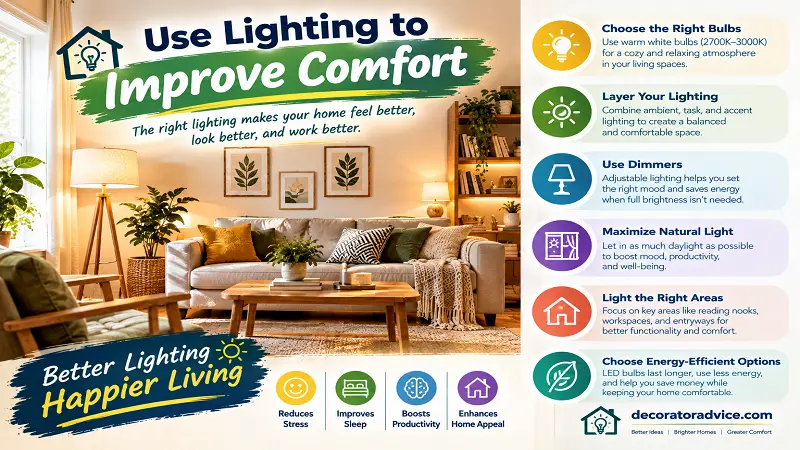
Lighting influences how a room looks and how comfortably people can use it.
Instead of relying on one bright ceiling light, consider combining general lighting with task lighting for specific activities. A desk lamp can help with reading or working, while suitable bedside lighting makes a bedroom more convenient.
Where possible, make use of natural daylight. Keep windows accessible and choose window coverings that provide the right balance of privacy and light.
The purpose of lighting is not simply decoration. It should also support everyday tasks, comfort, and safe movement around the home.
5. Plan Home Improvements Around Your Budget
A decorating project can become expensive when purchases are made before priorities are established.
Before starting, decide what needs to change and what can remain. Separate essential repairs from optional decorative upgrades, then set a spending limit for each part of the project.
For example, a living room refresh may only require rearranging existing furniture, replacing a few worn accessories, and improving lighting. A complete furniture replacement may be unnecessary.
Compare product dimensions, material quality, maintenance requirements, and total costs before purchasing. Include delivery and installation expenses where applicable.
If a project involves electrical work, plumbing, structural changes, or other regulated tasks, seek qualified assistance rather than relying solely on general decorating advice.
6. Find Practical DIY Projects
Do-it-yourself projects can help people personalize their homes and complete manageable improvements at their own pace.
Suitable projects may include organizing a cupboard, creating a simple decorative display, refreshing a picture frame, or assembling a storage solution according to its instructions.
Before beginning, check the tools, materials, skill level, and time required. Follow product instructions and use appropriate protective equipment.
Some jobs are not suitable for beginners. Work involving structural stability, hazardous materials, electrical systems, or complex plumbing may require a qualified professional.
Good DIY planning includes knowing when not to do the work yourself.
7. Make Sustainable Decorating Choices
A home can be improved without replacing everything it contains.
Repairing furniture, reusing decorative items, purchasing durable products, and choosing secondhand pieces where appropriate can reduce unnecessary consumption.
Before buying something new, consider whether an existing item can be repaired, repainted, rearranged, or used in another room.
For new purchases, compare durability, repairability, maintenance needs, and material information rather than judging a product only by its appearance.
These choices can help limit waste and may also make decorating more affordable over time.
8. How to Get More Value From Home Design Advice

Online decorating advice is most useful when it helps you make a decision that fits your actual space.
Use a simple process before starting any project:
- Identify the problem. Decide whether you need better storage, improved lighting, more comfortable furniture, or a visual refresh.
- Measure the space. Record room dimensions, door openings, window positions, and important clearances.
- Set a budget. Determine what you can reasonably spend and allow room for unexpected costs.
- Compare practical options. Consider maintenance, durability, safety, and how each option fits your routine.
- Review the result. Check whether the completed project solves the original problem before adding more changes.
When browsing the DecoratorAdvice.com Home topic, focus on ideas that answer a specific question instead of trying to follow every decorating trend.
A useful design decision should improve how the space looks, feels, or functions. It should also make sense for the people who live there.
Conclusion
Improving a home does not always require major renovations or expensive purchases. Better furniture placement, thoughtful color choices, practical storage, suitable lighting, and regular maintenance can make a meaningful difference.
DecoratorAdvice.com provides a starting point for exploring interior decorating, exterior design, and everyday home improvement ideas. Readers can use these resources to develop their own plans, compare options, and make informed decisions based on their spaces and budgets.
The most effective approach is to start with one clear goal, make practical changes, and build on what works for your home.
7. FAQ Section
What is DecoratorAdvice.com?
DecoratorAdvice.com is a blog covering home decoration, exterior design, and practical home tips. Readers can explore ideas for improving the appearance and functionality of their living spaces.
What can I find on DecoratorAdvice.com?
The website features content related to interior decorating, home exteriors, and home tips and guides. Available articles may help readers explore room styling, outdoor spaces, and everyday improvement projects.
Is DecoratorAdvice.com useful for decorating on a budget?
Its decorating and home improvement topics can help readers explore ideas before spending money. Actual costs depend on the materials, products, and work involved in a particular project.
Can beginners use home decorating guides?
Yes. Beginners can start with manageable projects such as rearranging furniture, organizing storage, or choosing accessories. Tasks involving technical or structural risks may require professional assistance.
How should I choose the right home improvement idea?
Consider your budget, available space, personal preferences, maintenance needs, and the problem you want to solve. Measure carefully and compare options before purchasing materials or furniture.