Decoration tips Decoradhouse from DecoratorAdvice focus on making a home comfortable, functional, and visually balanced. Start by planning each room, removing clutter, measuring furniture, choosing a simple color palette, improving lighting, adding useful storage, and finishing with personal decor that reflects your style.
The decoration tips decoradhouse from decoratoradvice approach can be used as a practical starting point for creating spaces that feel comfortable and organized. Instead of adding decoration simply because a room has empty space, focus on how the room works and what it actually needs.
Whether you are refreshing one room or making changes throughout your home, the right process can help you avoid unnecessary purchases and create a more cohesive look.
What Are Decoration Tips Decoradhouse From DecoratorAdvice?
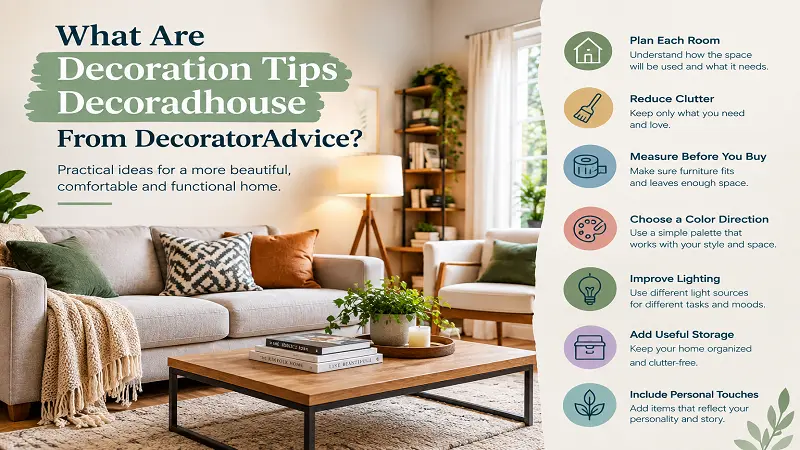
The decoration tips decoradhouse from decoratoradvice approach is centered on practical home styling. The main idea is to balance appearance with everyday function.
That means thinking about furniture placement before buying accessories, choosing colors that work with the existing room, using lighting for different activities, and leaving enough open space for comfortable movement.
A useful decorating process looks like this:
- Understand the purpose of the room.
- Remove unnecessary clutter.
- Measure the available space.
- Plan furniture placement.
- Choose a simple color direction.
- Improve the lighting.
- Add texture and storage.
- Finish with personal accessories.
This order makes decorating easier because major decisions are made before smaller decorative details.
Start With the Purpose of Each Room
Before choosing a color or buying furniture, decide what you want the room to do.
A living room may need to support conversation, television viewing, reading, or entertaining guests. A bedroom should provide comfortable sleeping space and enough storage. A home office needs a practical working area with suitable lighting.
Write down the two or three activities that happen most often in the room.
Then arrange the space around those activities.
This simple step can prevent a common decorating mistake: creating a room that looks attractive but is difficult to use.
Measure Before Buying Furniture
One of the most practical decorating habits is measuring before shopping.
Measure the room, doorways, windows, and existing furniture. Also consider the walking paths between major pieces.
A sofa may look perfect online but become a problem if it blocks a doorway or leaves very little space to move around.
Use your measurements when comparing furniture dimensions. If possible, mark the approximate footprint of a new item on the floor with tape before purchasing it.
This gives you a better idea of how much space the furniture will actually occupy.
Clear the Clutter Before Adding More Decor
Decorating does not always mean adding something.
Sometimes the room needs fewer things.
Remove broken objects, unused accessories, duplicate items, and anything that does not belong in the space. Then look at the room again.
You may discover that an existing table, chair, shelf, or artwork looks much better once unnecessary objects have been removed.
Open space also has value. Not every shelf, wall, or corner needs to be filled.
Choose a Simple Color Direction
Color can help connect different parts of a room, but you do not need a complicated palette.
Start with a dominant color and then choose one or two supporting shades.
For example, a neutral base can work with natural wood and a muted green accent. Another room might combine warm beige with brown and a small amount of blue.
Before painting a large area, test the color in the actual room. Look at it during different times of day because natural and artificial lighting can change its appearance.
The goal is not to follow a fixed color formula. The goal is to create a combination that works with your furniture, flooring, lighting, and personal taste.
Think About Furniture Placement First
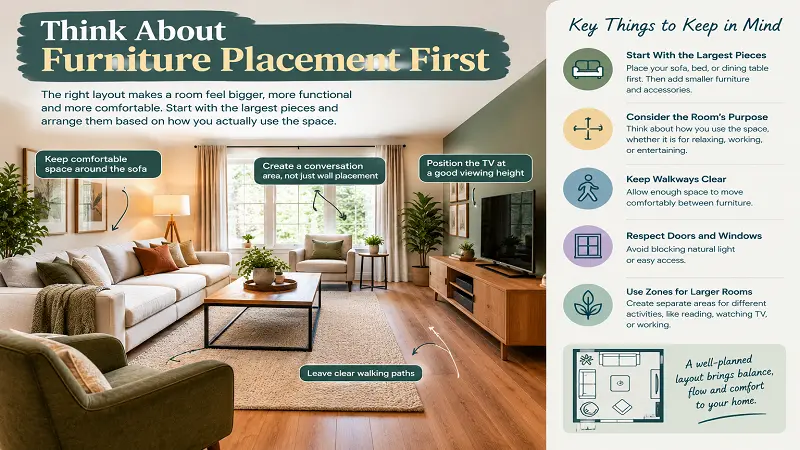
Furniture placement can completely change how a room feels.
Start with the largest pieces. Position the sofa, bed, dining table, or main storage unit first. Then consider smaller furniture and accessories.
Try to maintain comfortable paths through the room.
In a large living room, furniture does not necessarily have to sit directly against every wall. Creating a conversation area in the center can sometimes make the space feel more connected.
For smaller rooms, protect floor space and avoid pieces that make movement difficult.
The best arrangement is the one that supports the way you actually use the room.
Create One Clear Focal Point
A room can feel disorganized when too many objects compete for attention.
Choose one main feature that naturally attracts the eye.
It could be:
- A fireplace
- A large artwork
- A statement light
- A headboard
- A feature wall
- A large window
- An architectural detail
Once you have selected the focal point, arrange surrounding items so they support it.
You do not need every decorative object to make a statement.
Improve the Lighting in Layers
Lighting deserves more attention than it often receives.
Instead of relying on one ceiling fixture, consider different types of lighting for different purposes.
Ambient Lighting
Ambient lighting provides general illumination. Ceiling fixtures and larger lamps can contribute to this layer.
Task Lighting
Task lighting is useful for activities such as reading, cooking, studying, or working.
A desk lamp or reading lamp can provide focused illumination where it is needed.
Accent Lighting
Accent lighting can draw attention to artwork, shelves, plants, or architectural details.
Using different lighting sources gives you more flexibility throughout the day.
Add Texture Without Creating Clutter
A room can feel flat even when the color scheme is good.
Texture can solve this without requiring many additional objects.
Try combining materials such as:
- Wood
- Linen
- Cotton
- Wool
- Ceramic
- Glass
- Woven materials
- Metal
For example, a smooth wooden table can work well with a soft rug and textured cushions.
The objective is contrast, not quantity.
Use Storage as Part of the Design
Storage should be practical, but it can also contribute to the appearance of a room.
Consider:
- Storage benches
- Baskets
- Closed cabinets
- Wall shelves
- Bed storage
- Console drawers
- Decorative boxes
Keep frequently used items accessible while placing less attractive clutter behind closed storage.
When storage is planned properly, decorative surfaces remain easier to maintain.
Make Small Rooms Feel More Open
Small rooms require careful selection rather than excessive decoration.
Choose furniture that fits the available space and protect the main walking areas.
Vertical shelving can provide storage without taking much floor space. Mirrors can also be useful as decorative elements, particularly when positioned thoughtfully in relation to available light.
Avoid buying several small pieces simply because they appear to fit.
Sometimes one appropriately sized item looks better than several smaller objects.
Add Personal Details at the End
A home should reflect the people who live there.
Once the layout and major decorating decisions are complete, introduce personal items such as:
- Family photographs
- Books
- Artwork
- Travel souvenirs
- Handmade objects
- Plants
- Heirlooms
- Favorite collections
These pieces can give a room character.
However, displaying everything at once can make the space feel crowded. Choose items that have meaning or contribute to the room visually.
Use Decoration Tips Decoradhouse From DecoratorAdvice on a Budget
You do not need to replace everything to refresh a room.
Start with changes that cost little or nothing.
Rearrange Existing Furniture
Try a different layout before purchasing new pieces.
Remove Unnecessary Items
Decluttering can change the appearance of a room without spending anything.
Update Soft Furnishings
Cushion covers, throws, curtains, and rugs can introduce a new texture or color direction.
Improve Lighting
Adding a floor lamp, table lamp, or task light can change how a room functions.
Restyle Shelves
Group books, plants, artwork, and decorative objects instead of placing every item separately.
Paint Selectively
If the walls are limiting the room’s appearance, repainting a single wall or selected areas may be enough.
The key is to identify the biggest problem first rather than spending money on several small changes at once.
Common Decorating Mistakes to Avoid
The decoration tips decoradhouse from decoratoradvice concept is easier to apply when you also understand what can go wrong.
Buying Without Measuring
Always check dimensions before purchasing furniture.
Filling Every Empty Space
An empty area is not automatically a decorating problem.
Using Too Many Unrelated Colors
A simple palette usually makes coordination easier.
Ignoring Lighting
Furniture and colors can look different depending on the available light.
Choosing Appearance Over Comfort
A beautiful chair or sofa still needs to work for everyday use.
Making Everything Match
A room can have variety. Different textures, materials, and shapes can add character when they are coordinated.
Following Every Trend
Trends can provide inspiration, but they should not determine every decorating decision.
A Simple Decorating Checklist
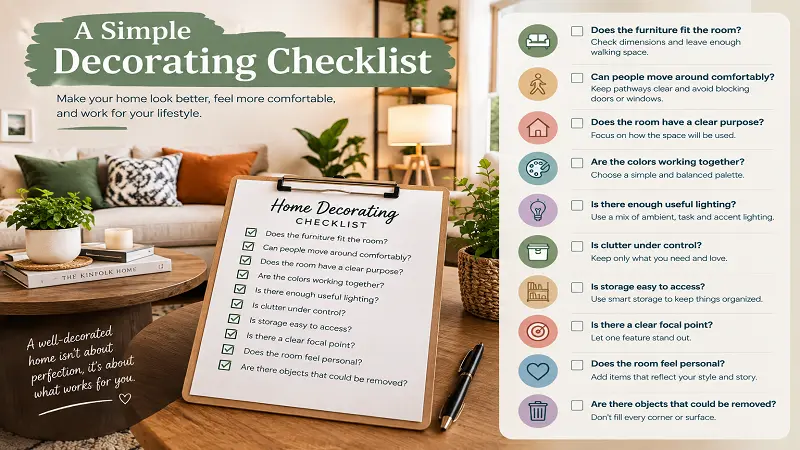
Before considering a room finished, ask yourself:
- Does the furniture fit the room?
- Can people move around comfortably?
- Does the room have a clear purpose?
- Are the colors working together?
- Is there enough useful lighting?
- Is clutter under control?
- Is storage easy to access?
- Is there a clear focal point?
- Does the room feel personal?
- Are there objects that could be removed?
If most answers are yes, you probably do not need to keep adding decoration.
Final Thoughts
Good decorating is less about buying more and more about making thoughtful choices.
The decoration tips decoradhouse from decoratoradvice approach provides a useful framework: understand the room, remove unnecessary clutter, measure carefully, plan furniture placement, establish a color direction, improve lighting, and then add personal details.
Start with one room instead of changing the whole house at once.
Make one improvement, live with it for a while, and then decide what the space needs next. This slower approach can produce a home that feels comfortable, functional, and genuinely personal rather than simply filled with decorative objects.
7. FAQ Section
What is the best way to start decorating a room?
Start by deciding how the room will be used. Remove unnecessary clutter, measure the space, and arrange the largest furniture pieces before choosing smaller decorative items.
How can I decorate my home without spending a lot?
Begin with free changes such as decluttering and rearranging furniture. Then consider smaller updates such as lighting, cushion covers, artwork, plants, or storage.
How many colors should I use in one room?
There is no universal number that works for every room. A simple dominant color with one or two supporting shades is an easy starting point for maintaining visual consistency.
How can I make a small room look better?
Use appropriately sized furniture, protect walking space, take advantage of vertical storage, and avoid filling every available surface with accessories.
Should furniture match throughout the house?
Furniture does not need to match exactly. Repeating selected colors, materials, or finishes can create a connection between rooms while still allowing each space to have its own character. See more